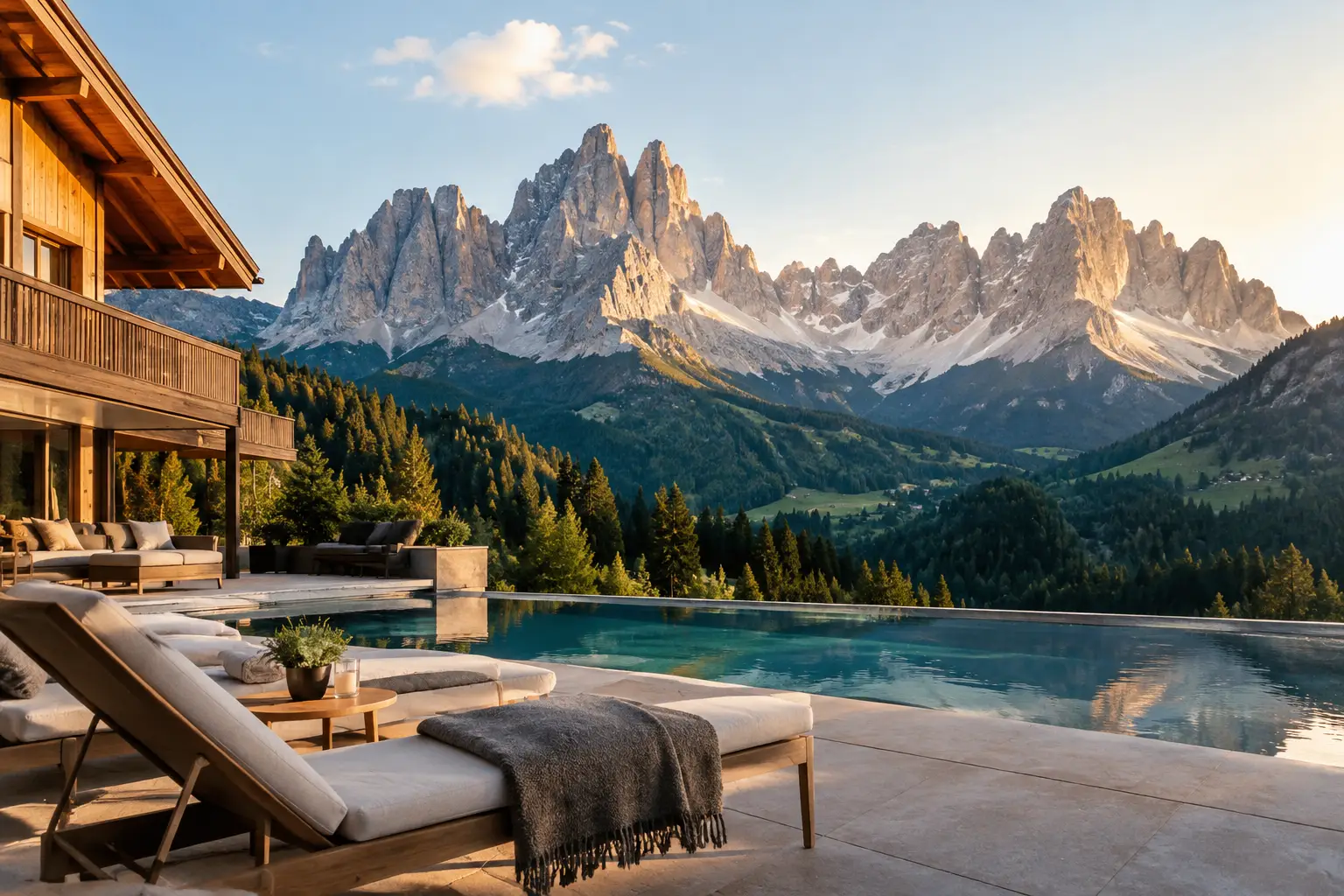
A Considered Guide to Luxury Dolomites Stays
At first light, the Dolomites can feel almost theatrical: pale limestone towers catching the sun above quiet villages, a freshly groomed run visible from the terrace, coffee warming beside the hearth. Yet the finest stays here are rarely about spectacle alone. A guide to luxury Dolomites stays begins with a more considered question: what kind of mountain time do you want to have?
For some, that means a private home close to the lifts, with a ski room, generous living spaces, and enough privacy for three generations to settle in comfortably. For others, it is a design-led retreat above a village, where long lunches, excellent wine, and unhurried walks matter as much as time on the slopes. The Dolomites reward travelers who choose their base with care.
Why the Dolomites Feel Distinct
The Dolomites offer a different expression of Alpine luxury from the grand resorts of France or Switzerland. There is polish, certainly, but it is often quieter. Traditional Tyrolean craft sits beside contemporary Italian design; a family-run restaurant may have an exceptional cellar; a mountain hut can serve a remarkably refined lunch without losing its sense of place.
This is also an Alpine region of great variety. The terrain spans broad, welcoming pistes and more demanding descents, while the villages vary from fashionable and lively to deeply tranquil. The food moves gracefully between Italian, Austrian, and Ladin influences. A stay can be as social or as secluded as the group requires.
That variety is the appeal, but it also means the Dolomites are not a destination to book by broad reputation alone. A beautiful chalet in the wrong valley can make a ski week feel overly logistical. Conversely, the right residence can give a large family or group the rare luxury of an itinerary that feels effortless without becoming overprogrammed.
A Guide to Luxury Dolomites Stays: Choose the Right Valley
The most useful decision is where to base yourself. Distance on a map can be misleading in the mountains, especially when winter roads, lift connections, and restaurant plans are involved.
Cortina d'Ampezzo for Style and a Lively Village
Cortina has long attracted travelers who want both skiing and a proper town atmosphere. Its boutiques, cafés, and restaurants bring energy after the lifts close, while the surrounding peaks provide a dramatic setting in every direction. It works particularly well for couples, groups of friends, and families who appreciate having a choice of dining and shopping close at hand.
The trade-off is that Cortina is more dispersed than a purpose-built ski resort. Not every exceptional residence is steps from a lift, and a private driver can be a meaningful part of the experience. For guests who prefer a walk-to-everything rhythm, select the location carefully. For those who value space, views, and a more residential setting, the villages and slopes above town can be especially appealing.
Alta Badia for Food, Families, and Easy Skiing
Alta Badia has an ease that makes it particularly compelling for multigenerational travel. Villages such as Corvara, San Cassiano, and La Villa sit within the Dolomiti Superski network, with access to long, scenic days on the mountain and routes that suit mixed abilities.
It is also one of the region's most rewarding areas for dining. The combination of highly regarded restaurants, traditional mountain refuges, and warm local hospitality adds depth to a week beyond the ski schedule. A well-positioned chalet here is ideal for guests who want to step into a relaxed village rhythm, ski the Sella circuit, and return to private space rather than a busy hotel lobby.
Val Gardena for Access and Mountain Energy
Val Gardena is a strong choice for dedicated skiers. Ortisei, Selva, and Santa Cristina offer direct access to a huge connected area, and Selva in particular suits those who want to make the most of the Sella Ronda and surrounding lifts.
Each village has its own character. Ortisei feels more village-like and polished, with pedestrian streets and a gentler pace. Selva is more immediate for skiing and can feel livelier in peak weeks. Santa Cristina often provides an appealing middle ground. Here, the question is less whether you can ski extensively and more whether you want your evenings to be animated or quiet.
More Secluded Corners for Privacy
For travelers who place privacy above proximity to a busy resort center, smaller settings around the region can be deeply rewarding. A secluded home may bring expansive views, calm, and more architectural individuality. It may also require a driver, advance restaurant planning, and a more deliberate approach to lift access.
This is not a compromise if the group values the residence as much as the ski area. A private chef's dinner, a long afternoon by the fire, and the silence of snowfall can become the defining moments of the stay. The important point is to be candid about priorities before choosing.
Select a Residence for the Way Your Group Lives
A luxury Dolomites stay should not be judged solely by bedroom count. For a family gathering, consider how the house performs at different moments of the day: whether there is a comfortable room for children to settle after skiing, a dining table large enough for the entire group, and a separate sitting room where early risers can read without waking everyone else.
Ski access deserves equally close attention. “Near the slopes” can mean a short walk, a brief drive, or true ski-in/ski-out access. Each can work beautifully, but they create different mornings. Families with young children often benefit from the simplest possible departure. Confident skiers may prefer a more private location and accept a short transfer in return.
Architecture matters in the Dolomites because it shapes the feeling of retreat. Look for homes that respect local materials - aged timber, stone, wool, and clean-lined joinery - without turning Alpine character into a theme. The most memorable residences feel grounded in their landscape, with generous windows framing the peaks rather than competing with them.
Wellness facilities can be valuable, particularly in winter, but their usefulness depends on the group. A sauna or steam room is often enough for travelers who spend full days skiing. For a celebratory trip or a longer stay, a pool, treatment room, or dedicated spa area may genuinely change the rhythm of the house. It is worth choosing amenities for how they will be used, not simply how they read on a listing.
Let Service Remove Friction, Not Atmosphere
The best private hospitality is present before it is noticed. In the Dolomites, practical arrangements can make an outsized difference: ski fitting in the chalet, lift passes prepared in advance, airport transfers timed around a group's arrival, and a stocked kitchen for the first evening.
Dining requires thought as well. Some of the region's best tables are intimate and book early, especially over Christmas, New Year, and the February school holidays. A concierge can balance restaurant reservations with evenings at home, arranging a chef when the group would rather linger by the fire than dress for dinner.
For families, the details are often smaller but no less important. Child-friendly instructors, suitable equipment, a babysitter who understands the household's schedule, and realistic lunch plans can preserve the pleasure of a ski day. For adults traveling together, a private guide can open up the mountain beyond the obvious routes, while a driver allows everyone to enjoy a long lunch without watching the clock.
Alpin Privé approaches these arrangements as part of the stay rather than a separate layer of administration. The intention is not to fill every hour, but to ensure that the desired moments are easy to reach.
Consider Winter and Summer as Different Stays
Winter brings the celebrated ski network, crisp village evenings, and the ritual of returning home through the snow. It is a natural choice for festive gatherings and active family weeks. Peak dates should be secured early, particularly if the group needs a larger home with several equal bedrooms and reliable ski access.
Summer is quieter and, for many travelers, more revealing. The same valleys become a setting for guided hikes, cycling, climbing, lake swims, and long terrace lunches. Temperatures are generally comfortable, though mountain weather can change quickly. A private guide is useful not because the paths lack beauty, but because local knowledge helps tailor the day to fitness, weather, and appetite for adventure.
Shoulder periods can offer a more contemplative experience, but some lifts, restaurants, and services may operate on reduced schedules. This suits guests seeking stillness and independence, less so those expecting the full resort calendar.
Plan for the Details That Protect Your Time
The Dolomites are reachable from several airports, but transfer times vary considerably by valley and season. A flight that looks convenient on paper may lead to a long final drive. For groups arriving from different cities, coordinating the travel plan before confirming the residence can avoid a difficult first and last day.
Build a little flexibility into the week. Weather, energy levels, and the pleasure of an unexpectedly excellent mountain lunch should have room to influence the plan. Reserve the hard-to-secure experiences, arrange the essential logistics, then leave space for the mountain to set its own pace.
The right Dolomites stay is not defined by how much is arranged. It is defined by the quiet confidence of knowing that, when the group decides what it wants next, the right place, person, or plan is already close at hand.
Comments