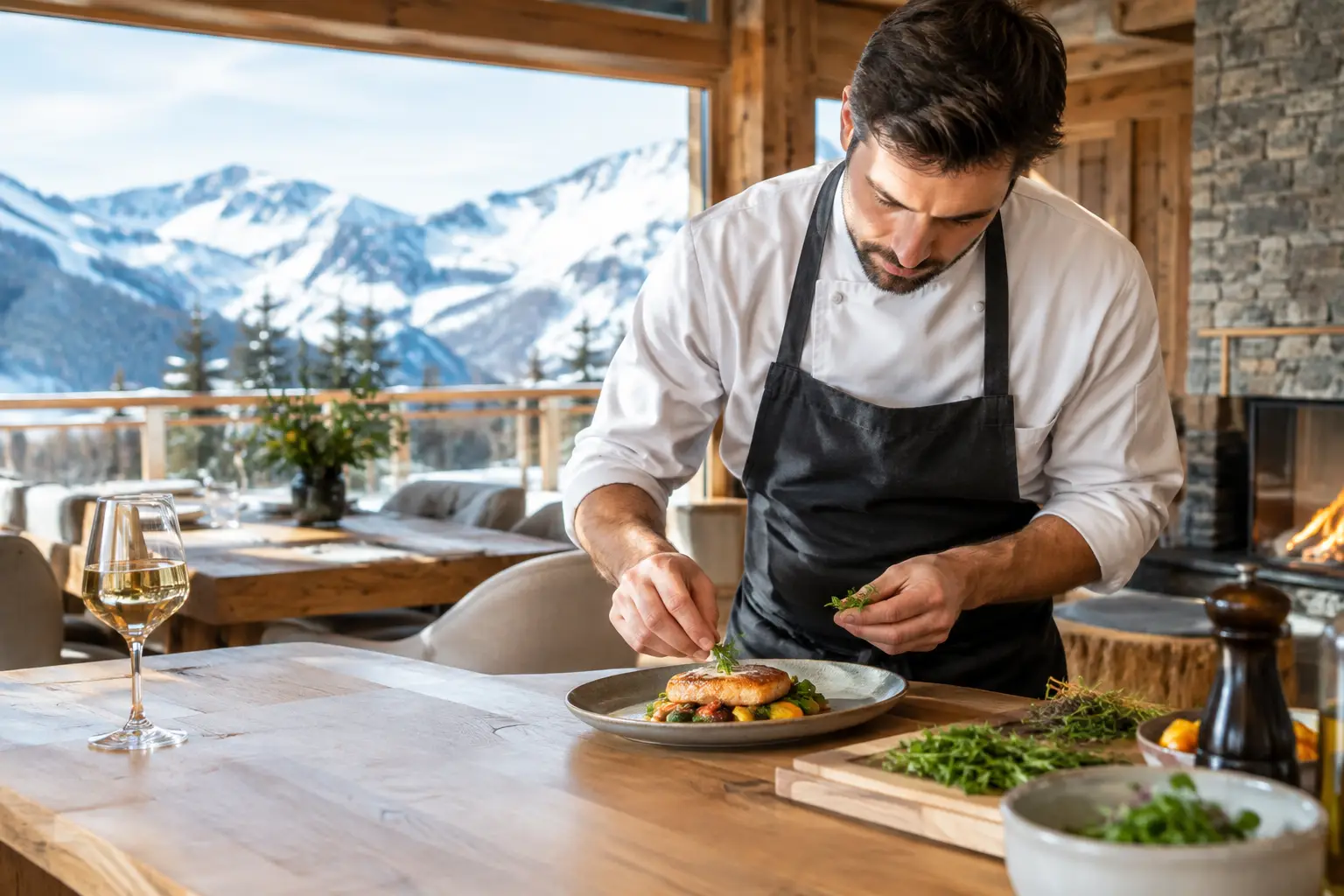
Private Chef Ski Chalet: A Better Way to Stay
The last run ends just as the light begins to leave the valley. Boots come off by the fire, children disappear toward the cinema room, and the table is already being set. In a private chef ski chalet, dinner is not another reservation to make or a timetable to keep. It is the gentle rhythm of the house, shaped around the people within it.
For families and groups traveling to the Alps, this is often the detail that changes the entire character of a stay. A chef brings more than accomplished cooking. They create ease around the hours that are otherwise hardest to coordinate: breakfast before ski school, a restorative lunch after deep snow, aperitifs for friends arriving at different times, and dinner that feels celebratory without requiring anyone to host.
What a Private Chef Ski Chalet Really Offers
A chalet chef gives the day a sense of continuity. Breakfast can be as simple as warm viennoiseries, fruit, eggs, and coffee served when the first guests come downstairs, or as generous as a long, unhurried spread after a morning spent in the spa. On ski days, that flexibility matters. Not every guest wants the same start, nor the same pace.
By evening, the chalet becomes its own restaurant, but one with no neighboring tables and no journey home through the cold. The menu can follow the season and the destination: a delicate mountain broth after snowfall, locally sourced trout, a beautifully prepared roast to share, or a lighter Mediterranean-inspired supper after a bright spring day on the slopes. The setting is personal, and so is the food.
This is particularly valuable for larger groups. Booking a table for ten or twelve in a sought-after resort can mean fixed seating times, separate tables, or a compromise on atmosphere. In a private residence, everyone gathers in one place. The youngest guest can leave early, a bottle can remain open by the hearth, and the evening can unfold without an agenda.
The Pleasure Is in the Personal Detail
The most memorable chalet dining is rarely about formality. It is about knowing that a favorite childhood dessert will appear after a day of skiing, that there is something satisfying waiting for a guest who has returned late from the airport, or that a birthday dinner will feel intimate rather than staged.
Before arrival, a thoughtful chef will usually learn the group’s preferences, dietary requirements, and rhythm. This is not simply a matter of noting allergies. It is an opportunity to understand how people like to travel. A family with young children may want early, familiar suppers followed by relaxed adult dining. A group of friends may prefer long breakfasts, a casual shared lunch, and more elaborate dinners paired with wines from the region.
There are also practical distinctions worth discussing in advance. Some guests want a chef for every meal, while others prefer breakfast and dinner service, leaving their ski-day lunches to mountain restaurants. In resorts with exceptional on-piste dining, this balance can be ideal. Elsewhere, particularly during peak weeks, the comfort of returning to the chalet for lunch may be far more appealing.
Menus That Belong to the Mountain
A strong private chef understands the particular appetite of a ski holiday. Days outside create room for richness, but the best menus still have restraint. After a long day on the mountain, guests often want deeply comforting food without feeling weighed down for the following morning.
The Alpine pantry offers much more than fondue and raclette, though both can be wonderful when prepared with care and served in the right mood. French valleys offer exceptional cheeses, charcuterie, game, freshwater fish, and winter vegetables. In Italy’s Dolomites, the table may lean toward handmade pasta, local mushrooms, and elegant regional wines. In Switzerland or Austria, a chef can bring a similarly grounded sense of place through seasonal produce and local specialties.
For international guests, familiar favorites also have their place. The advantage of a private setting is that a menu need not perform an idea of the Alps at every meal. One night might be an elegant local supper; the next, a relaxed family-style feast designed around exactly what the group enjoys.
How Chef Service Shapes the Chalet Experience
The finest service is present when needed and almost invisible when it is not. A chef and chalet team should make the house feel cared for without making it feel managed. The kitchen is restored after breakfast, snacks appear without ceremony, and dinner is ready at the agreed hour, whether the group has returned from the slopes on time or lingered over a late afternoon drink in the village.
That discretion becomes especially meaningful in a private chalet. Unlike a hotel, the home belongs to the group for the week. There is no lobby to cross, no restaurant filled with other guests, and no pressure to dress for an audience. A chef complements that privacy, allowing the dining room to feel like an extension of the living space rather than a service environment.
For celebrations, the possibilities widen. A private chef can create a birthday dinner that feels entirely unlike a banquet, with a menu inspired by the guest of honor and a pace suited to the evening. For a multigenerational gathering, the kitchen can bridge different tastes with confidence. For couples, even a larger chalet can feel quietly intimate when dinner is served beside the fire after the rest of the day has faded into snow.
What to Clarify Before You Book
Chef arrangements vary between chalets, resorts, and weeks of the season. Some residences include a dedicated chef and host as part of a fully staffed stay. Others offer chef service as a tailored addition, perhaps for selected dinners or a particular celebration. Grocery costs, wine, staff days off, and the precise number of meals included should be clear before confirming the stay.
It is also wise to share expectations openly. If you value formal plated dinners, say so. If you would rather have generous dishes placed in the center of the table and a relaxed flow between courses, that is equally useful. A chef can do both beautifully, but the experience is better when the style is understood from the beginning.
For guests with dietary needs, early communication is essential. A skilled chef can accommodate gluten-free, dairy-free, vegetarian, vegan, or child-friendly preferences with imagination, but a detailed conversation prevents unnecessary substitutions once everyone has arrived. The same applies to wine. Some groups prefer the chef to suggest pairings; others arrive with favored bottles or ask for a carefully chosen local cellar.
Choosing the Right Chalet for Dining Well
Not every beautiful chalet is designed for the same kind of gathering. For a group that sees dinner as the heart of the trip, look beyond bedroom count. A generous dining table, a well-considered kitchen, a warm living area nearby, and enough space for guests to linger all shape the evening.
Location matters, too. A ski-in, ski-out chalet may make midday returns effortless, especially for families. A secluded property above the village may offer greater quiet and views, but require more planning around transport. Neither is inherently better. The right choice depends on whether your group values spontaneous access to the slopes, a walkable village setting, or the calm of a more private hillside retreat.
At Alpin Privé, the most distinctive homes are chosen not only for their architecture and privacy, but for the way they support time together. The right chef service should feel equally considered: deeply personal, never performative, and attuned to the character of the house.
When planning your next mountain escape, think beyond where everyone will sleep. Consider where you will gather after the lifts close, what will be waiting on the table, and how it will feel to let the evening belong entirely to your own company.
Comments