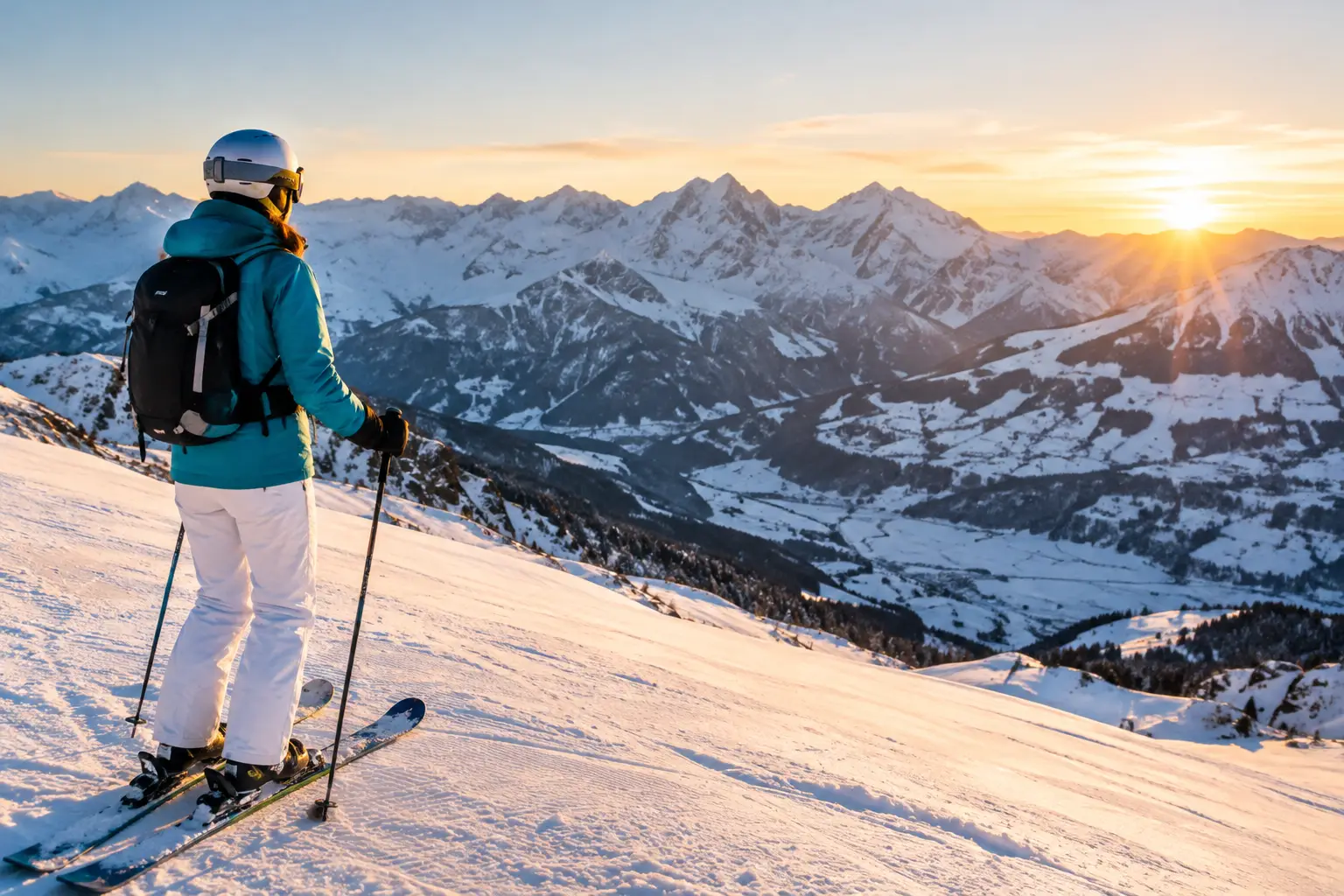
When Does Ski Season End Across the Alps?
The question, “when does ski season end?”, rarely has one simple answer in the Alps. A warm March week can make a low village feel like spring, while higher slopes remain beautifully preserved above the treeline. By April, the character of a ski holiday changes: longer lunches in the sun, quieter lifts, softer afternoon snow, and a welcome return each evening to the privacy of a well-chosen chalet.
For families and private groups, the end of the season is less about a single closing date than choosing the right resort, elevation, and pace. A considered late-season stay can be among the most appealing weeks of the winter, provided expectations are matched to the mountain.
When Does Ski Season End in the Alps?
Most major Alpine resorts close between early April and early May. The broad pattern is reliable, though snowfall, altitude, and local operating decisions will always shape the detail. Lower and more southerly resorts may begin winding down in late March or early April. High-altitude destinations and glacier areas can remain open well into May, and occasionally beyond.
The traditional winter calendar begins to shift after Easter. Some resorts hold their closing weeks around the holiday, especially when it falls in late March or early April. Others retain a more substantial lift network until later in the month. This is why dates alone are not enough. A resort’s vertical range matters more than its name on a calendar.
Courchevel, Méribel, Val d’Isère, Tignes, Verbier, Zermatt, St. Anton, and St. Moritz each have distinct late-season rhythms. Their appeal depends on where the skiing sits, how much terrain faces north, and whether a glacier or high alpine sector extends the season. Chamonix and the Dolomites are similarly varied: both can be exceptional in spring, but conditions differ dramatically between valleys, aspects, and elevations.
Altitude Matters More Than the Month
For a late-March or April ski week, altitude is the first consideration. Resorts with extensive terrain above roughly 6,500 feet tend to offer more dependable snow, particularly when the upper slopes face north or retain a cold overnight freeze. Higher lift stations are not a guarantee of powder, but they give a resort more resilience as daytime temperatures rise.
Tignes and Val d’Isère are among the most dependable choices for late-season skiing, with a large amount of high terrain and a long-established spring culture. Zermatt’s glacier and exceptional elevation make it a strong option when snow reliability is the priority. Verbier combines serious high-mountain terrain with a lively village atmosphere, though its best spring skiing often rewards an early start.
The Three Valleys, including Courchevel and Méribel, remains attractive later in the season because of its scale. A private group can follow the best snow across a vast linked domain rather than ski the same few runs each day. In warmer spells, it may mean starting high, moving with the sun and snow conditions, then returning for lunch before the lower pistes soften.
St. Moritz and the Engadin offer another kind of spring appeal. The light is clear, the landscape broad, and the pace often more elegant than urgent. In the right conditions, high, north-facing slopes ski beautifully while the valley begins to show the first signs of the coming summer.
The Spring Snow Day Has Its Own Rhythm
Late-season skiing is at its best when approached on its own terms. Winter’s all-day chase for fresh tracks gives way to a more measured schedule. Overnight cold firms the snow, morning sun gradually softens it, and the most enjoyable runs are often found between late morning and early afternoon.
There is an art to reading the mountain. East-facing slopes tend to soften first, followed by south-facing terrain, while north-facing pistes can remain firmer and more winter-like. A knowledgeable instructor or private guide can make a meaningful difference here, particularly for mixed-ability families. They can choose the right aspect at the right hour, avoid heavily traveled lower runs, and find sheltered terrain when the weather changes.
This rhythm also suits travelers who prefer a holiday with room to breathe. A relaxed breakfast in the chalet, a few excellent hours on the mountain, then a long terrace lunch can feel more civilized than a rigid first-lift-to-last-lift agenda. The skiing remains central, but it shares space with the pleasure of being in the Alps.
What Closing Dates Really Mean
A published closing date does not mean every lift and run will operate until that day. Resorts progressively reduce their networks when demand falls or snow coverage becomes limited at lower elevations. A lift connecting two sectors may close before the high lifts. A village run can become patchy while upper bowls remain in very good condition.
This matters for the location of a private residence. A ski-in, ski-out chalet is particularly valuable late in the season, but the precise piste connection should be assessed rather than assumed. If the home sits beside a low, south-facing run, access may become less reliable in a warm week. A short chauffeured transfer to a higher lift can sometimes be the more dependable and practical arrangement.
It is also worth distinguishing between lift access and the wider resort experience. By April, some mountain restaurants, boutiques, and nightlife venues have reduced hours, while others are at their most enjoyable. The quieter atmosphere is a benefit for guests seeking privacy, but those hoping for the full energy of peak season should choose dates carefully.
The Best Time for Different Kinds of Ski Trips
There is no universally perfect final week of the season. For serious skiers, late March through the first half of April often offers the best balance of snow depth, long days, and a full lift system. High-altitude resorts are the natural choice, especially for groups who want to ski with purpose each day.
For families, school vacation weeks can be appealing, though they require earlier planning. Spring weather is generally gentler for children, and the chance to combine skiing with snow play, sledding, or a leisurely lunch makes the trip feel less demanding. Selecting a chalet near a beginner area or a reliable lift connection reduces the daily logistics that can otherwise distract from the week.
Couples and friendship groups may find the period after the main holiday weeks especially rewarding. The mountains are calmer, restaurant reservations are often easier, and a private retreat feels even more removed from ordinary life. This is a fine time to pair skiing with a spa afternoon, wine tasting, a snowshoe walk, or simply the silence of snowfall beyond the windows.
By late April, travelers should be more selective. Tignes, Val d’Isère, Zermatt, and certain glacier-access resorts are generally safer choices than lower villages. The experience can be excellent, but it is no longer the moment to book based on a broad idea of “the Alps.” Resort-specific knowledge becomes essential.
How to Plan a Late-Season Chalet Stay
A thoughtful plan begins with the priorities of the group. If dependable skiing is non-negotiable, choose elevation first and let the chalet follow. If the week is equally about dining, privacy, and time together, a characterful residence in a lower resort may still be entirely right, particularly in March when the snowpack is strong.
Ask practical questions before confirming dates: Which lifts are scheduled to operate? Is the chalet’s ski access usually maintained at that point in the season? Where are the highest and most protected slopes? How much driving is involved if conditions favor another sector? These details are more useful than a generalized snow report.
At Alpin Privé, this is where careful destination knowledge matters. The difference between a good spring ski trip and an effortless one is often not the size of the resort, but the alignment of a private home, local logistics, and the group’s preferred rhythm.
Late season rewards travelers who are willing to follow the mountain rather than insist it behave like January. Choose the right altitude, begin the day with intention, and leave enough space for a sunlit lunch and an unhurried return to the warmth of the chalet.
Comments