What Sets Luxury Chalets Apart in the Alps
A great mountain holiday is often decided before the first lift opens. It begins with the address, the view from the breakfast table, the ease of arriving with family or friends, and the reassuring sense that every detail has been considered. Luxury chalets offer something hotels, however polished, cannot always provide: a private setting shaped around the way a particular group wants to spend time together.
For some, that means stepping from a ski room directly onto the piste in Courchevel or Verbier. For others, it is a quiet property above Megève, where a long lunch can run into the late afternoon and the only schedule is dinner by the fire. The distinction lies less in excess than in freedom, space, and the quality of attention behind the stay.
Luxury chalets are private homes, not simply large accommodations
The most compelling chalets have a sense of identity. Their architecture may be contemporary and restrained, with glass framing a glacial valley, or deeply rooted in local craft, with aged timber, stone fireplaces, and hand-finished details. Either approach can feel sophisticated when it belongs to its setting.
What matters is the relationship between the house and the mountain. A chalet in Zermatt should make the Matterhorn feel present, whether through a terrace, a picture window, or the orientation of the living room. In the Dolomites, the drama may be in the limestone peaks at sunset. In St. Moritz, it may be the calm of a private residence removed from the social energy of the village, yet close enough for dinner reservations and the lake.
Privacy is equally architectural. The best homes create places for a group to gather without requiring everyone to be together all the time. There may be a fireside salon for aperitifs, a cinema room for children, a library for a quieter hour, and bedrooms that feel genuinely removed from the shared spaces. This balance is particularly valuable for multigenerational families and groups of friends traveling together.
A chalet should not feel like a hotel suite multiplied several times. It should feel like a home with enough room for its guests to settle in.
The location changes the rhythm of the stay
Ski access is often the first practical question, and understandably so. True ski-in, ski-out access can transform a winter week, especially with children or mixed ability groups. It eliminates the daily choreography of drivers, equipment, and meeting points. Yet it is not the only measure of a well-placed property.
Some of the most beautiful homes sit a short drive from the lifts, in locations chosen for their views, larger grounds, or peace. In Chamonix, for example, a private setting with a direct view of Mont Blanc can be more rewarding than a central address, provided transport is thoughtfully arranged. In Méribel, a chalet near the village can offer the right balance between access to the Three Valleys and the pleasure of being able to walk to a bakery, bar, or dinner reservation.
The right location depends on the group. Dedicated skiers may value immediate piste access above all else. Guests planning a slower week, perhaps with spa appointments, winter walks, and long lunches, may prefer privacy and atmosphere over proximity. During summer, trails, cycling routes, and village life become as relevant as lifts and ski rooms.
A considered booking looks beyond a map pin. It asks how the group will actually move through each day.
Service should be present without taking over
Service in a private chalet is most elegant when it anticipates needs without becoming a performance. A warm welcome after a long transfer, a stocked kitchen that reflects the guests' preferences, equipment ready for the first ski morning, and a table set for dinner can make a property feel immediately personal.
The level of staffing should suit the pace of the stay. Some guests want a private chef and full service every evening, with canapés before dinner and a breakfast spread prepared each morning. Others prefer a lighter arrangement: daily housekeeping, a few chef dinners, and the flexibility to explore local restaurants. Neither is inherently better. The question is whether the service model is clear, well managed, and adapted to the group.
Concierge support is particularly valuable in mountain destinations where the most desirable arrangements require local knowledge and advance planning. Ski instruction for different abilities, a private guide for an off-piste day, a table at a small restaurant, childcare, drivers, or a birthday celebration in the chalet all involve details that are easy to underestimate from afar.
At Alpin Privé, this is approached as part of the residence itself. The chalet is the setting, but the experience depends on how well travel, arrivals, dining, skiing, and time away from the slopes are coordinated around it.
Design is felt in the details
A luxury chalet does not need to announce itself with polished marble or oversized chandeliers. Often, the more memorable qualities are quieter: the weight of a linen curtain, the softness of a reading chair, the acoustics of a room after snowfall, or a bathroom designed with enough space to unwind after a day outside.
Well-designed ski rooms deserve more attention than they receive. Heated boot warmers, proper storage, benches, drying space, and a logical route to the lift can remove friction from every ski day. The same is true of practical details within the house: generous dining tables, bedrooms with comparable comfort, reliable Wi-Fi, and a living room arranged for conversation rather than appearance.
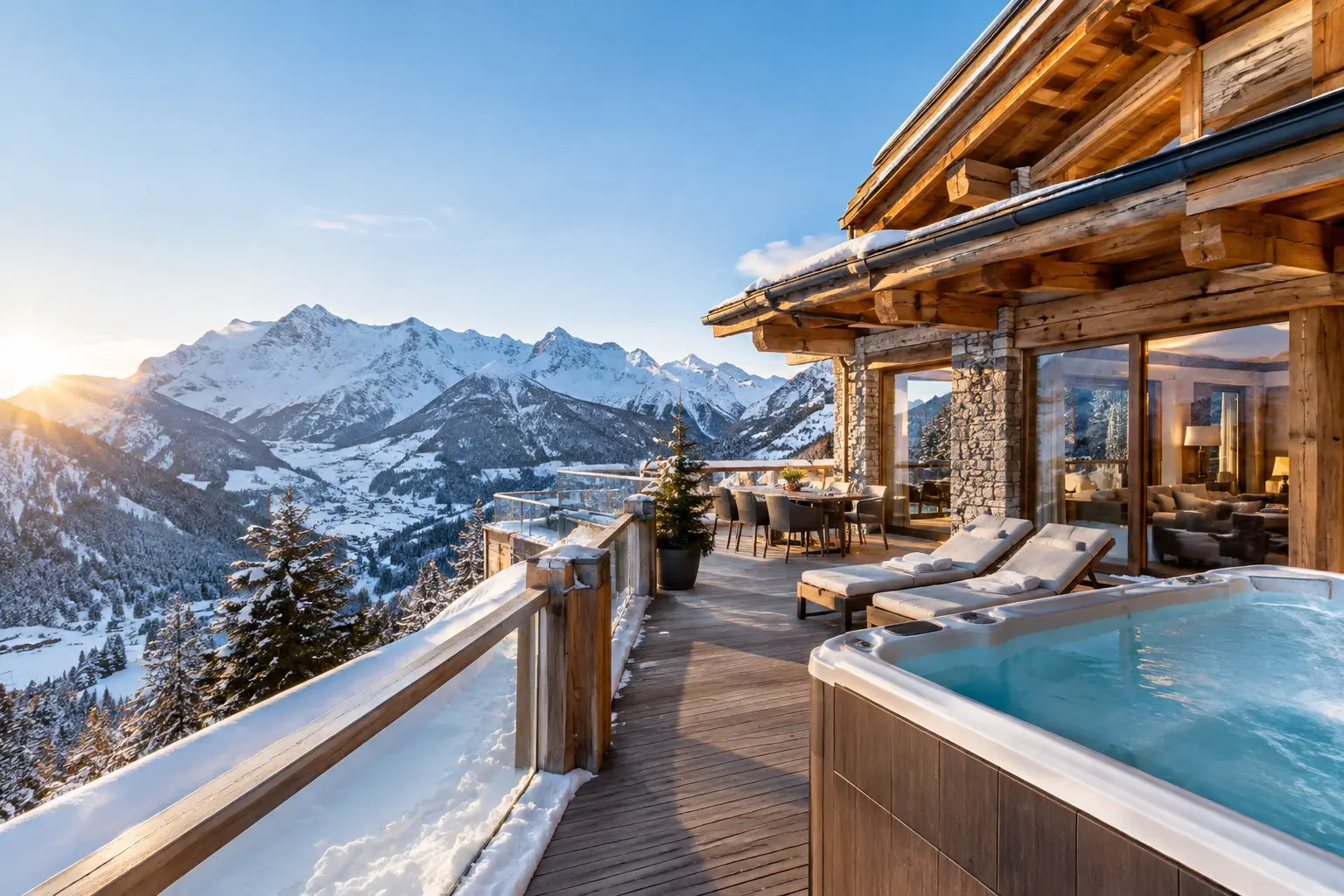
Wellness spaces can be equally meaningful, but only when they are thoughtfully executed. A pool, sauna, hammam, massage room, or outdoor hot tub is not automatically essential. For a family with teenagers or guests returning from demanding ski days, they may become the center of the afternoon. For a couple spending most days in the village and evenings at restaurants, a smaller, beautifully finished chalet may be a better fit than a larger home built around amenities they will barely use.
How to choose among luxury chalets
The strongest choice starts with the group rather than the property photographs. Begin with bedroom requirements and the degree of privacy each guest expects. A home sleeping twelve may have six equally appealing suites, or it may include one smaller room intended for children. For adult groups, this distinction can shape the entire experience.
Then consider the non-negotiables. These may include ski-in, ski-out access, a private chef, a swimming pool, an elevator, easy access for older family members, or a location within walking distance of the village. It is useful to identify the two or three elements that will genuinely affect the week, rather than trying to secure every possible feature.
Season matters as well. Peak holiday weeks bring a particular energy, but also more limited availability and busier resorts. January can offer quieter slopes and excellent snow conditions, while March often brings longer days and a more relaxed rhythm. In summer, chalets reveal a different character altogether, becoming bases for hiking, cycling, climbing, lake days, and long evenings outdoors.
Finally, look for accuracy. Descriptions should be specific about capacity, access, staffing, and what is included. Beautiful imagery is useful, but it cannot tell you whether a steep approach is practical for your party, whether the village is walkable in ski boots, or whether the chef service covers every night. A trusted, knowledgeable advisor should be comfortable discussing these details candidly.
The most rewarding chalet stays are rarely defined by a single dramatic feature. They are defined by the quiet ease of a home that suits its guests: skis warmed and waiting, a table ready when everyone returns, and enough privacy for the mountains to feel entirely your own.
Comments