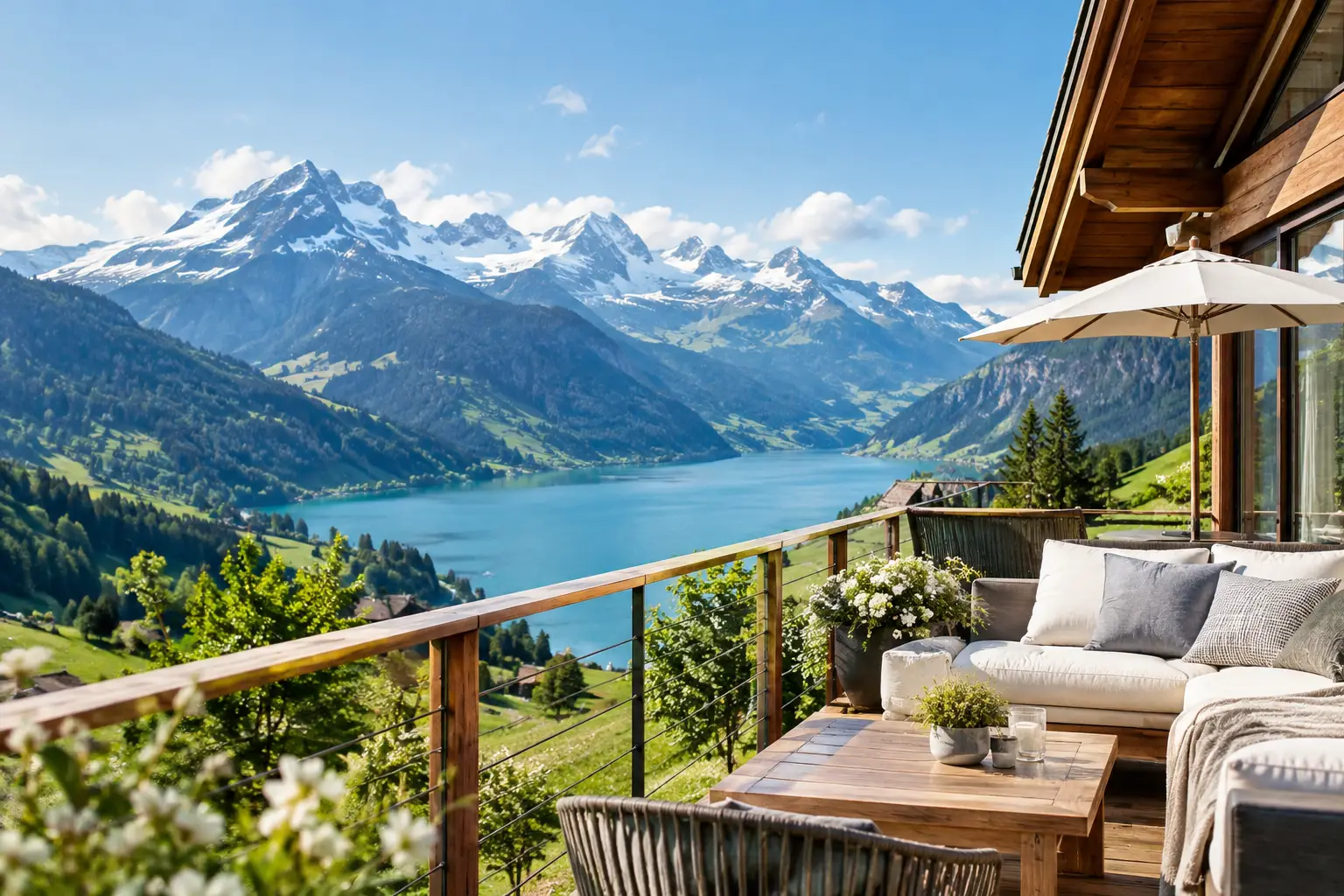
Swiss Alpine Summer Travel Guide for Private Stays
The Swiss alpine summer travel guide begins with a simple shift in perspective: this is not winter without snow. From June through September, the Alps become a slower, more spacious kind of escape, shaped by early light on the lakes, wildflower meadows above the tree line, and long lunches that seem entirely reasonable after a morning on the trail. For families and private groups, the season offers something particularly valuable: extraordinary landscapes without the compressed rhythm of a ski-week schedule.
A well-chosen residence becomes the center of the stay. Rather than moving constantly between hotels, guests can settle into a mountain home with room for children to disappear into the garden, friends to gather around a late table, and quiet corners for an unhurried afternoon. The best Swiss summer itineraries leave room for both high-altitude adventure and the pleasure of doing very little.
Choosing the Right Swiss Alpine Summer Base
Switzerland is compact on a map, but its mountain regions have distinctly different characters. The right destination depends less on a checklist of attractions than on the pace and atmosphere a group wants around the days in between.
Zermatt for drama, altitude, and serious hiking
Zermatt has an intensity that remains compelling long after the snow has gone. The Matterhorn changes character throughout the day, from a pale first view at breakfast to a darker, more sculptural presence in the evening. The village is car-free, which gives even the busiest weeks a slightly removed feeling, though it also requires thoughtful arrival planning and luggage coordination.
Summer here suits guests who want to walk well above the valley floor. High mountain trails, glacier views, and lift-assisted routes make it possible to design days for different fitness levels. It is also an excellent choice for multigenerational groups, provided the program does not become too ambitious. The altitude is real, and the most elegant approach is to allow a day or two to acclimatize before planning longer hikes.
St. Moritz for lakeside polish and culture
St. Moritz feels different from the more rustic valleys. Its appeal lies in the combination of Engadin light, broad open landscapes, refined restaurants, design-led shopping, and a social calendar that extends beyond the mountains. The lakes invite sailing, paddleboarding, and walks along the shore, while the surrounding valleys offer cycling and hiking that can be as gentle or challenging as desired.
It works particularly well for guests who like their Alpine time balanced with cultural texture and a more cosmopolitan rhythm. July and August can be lively, especially around major events. For a quieter stay, late June or September often offers the same clear air and sense of place with fewer people in the village.
Verbier for a lively private-house stay
Verbier has an easy confidence in summer. Its slopes become a broad network of hiking and biking terrain, and its terraces fill with a mix of local residents, seasonal owners, and international visitors. For groups of friends or active families, it offers a useful range of activity without requiring every day to feel organized around one headline excursion.
The trade-off is that Verbier can feel energetic during peak weeks. A chalet positioned slightly above the center, with open views and considered transport arrangements, offers a welcome degree of privacy while keeping dinner and village life within easy reach.
The Bernese Oberland for classic mountain scenery
For travelers drawn to traditional Swiss villages, waterfalls, and wide pastoral views, the Bernese Oberland has enduring appeal. The region’s railways and mountain lifts make it unusually accessible for mixed-age groups, while the landscape provides a softer, greener counterpoint to the higher, rockier drama of Zermatt.
This is often the right choice for a first Swiss Alpine summer, particularly when grandparents, younger children, and hikers are traveling together. The practical ease of getting around matters as much as the views.
When to Go: The Swiss Alpine Summer Season
The finest timing depends on what a stay is meant to include. June brings long days, fresh green meadows, and a quieter atmosphere, though some high routes may still hold snow and a few seasonal restaurants or lifts may not yet be open. It is a beautiful month for lower-elevation walks, lakeside lunches, and privacy.
July and August bring the fullest expression of the season. Trails are largely open, alpine flowers are at their best in many areas, and villages have more energy. This is the most reliable period for families traveling around school schedules, but it is also when sought-after homes and experienced guides should be arranged well in advance.
September is often the connoisseur’s choice. The light becomes clearer, evenings call for a fire and a sweater, and the mountains begin to feel more private again. Days can still be wonderfully warm, but weather patterns are less predictable and some mountain operations begin to wind down later in the month. It is ideal for couples, photographers, and groups who value atmosphere over a packed activity calendar.
A Swiss Alpine Summer Travel Guide to Days Well Spent
The strongest summer stays have a deliberate looseness. Plan one defining experience each day, then let the rest unfold around it. A private guide can lead a family on a high pasture walk with a picnic waiting at a panoramic point, while more ambitious hikers continue toward a hut for lunch. Another day might begin with a morning swim in a mountain lake and end with aperitifs on the terrace as the light leaves the peaks.
E-bikes are especially useful for groups with different levels of confidence. They make valley routes, village-to-village outings, and longer climbs accessible without turning the day into a test of endurance. Private instruction is worth considering for mountain biking, climbing, or via ferrata, where local knowledge and equipment standards matter greatly.
Not every day needs a summit. Switzerland’s smaller pleasures are often the ones guests remember: a dairy farm lunch after a short walk, a train crossing a high pass, a flower-filled table at a mountain restaurant, or a late afternoon spent reading in the garden while children play nearby. The aim is not to collect routes. It is to feel properly settled in the landscape.
The Private Residence Advantage
A private chalet or apartment changes the practical shape of a mountain holiday. It allows breakfast to happen when the household is ready, not when a dining room opens. It creates a calm place to return to after a day in the sun, with space for damp hiking boots, children’s games, a massage, or a long, informal dinner prepared at home.
For families, bedroom configuration deserves as much attention as location. Interconnecting rooms may suit younger children, while teenagers and grandparents often appreciate genuine separation. Outdoor space is a considerable asset in summer, but so is a shaded terrace or indoor living room for the occasional afternoon storm.
Service should feel present but not intrusive. A thoughtful concierge can arrange guides, restaurant reservations, transfers, grocery provisioning, childcare, and a private chef for selected evenings. The point is not to schedule every hour. It is to remove the small frictions that can distract from time together.
Practical Considerations for a Polished Stay
Mountain weather is changeable even in August. A warm morning in the valley can become cool and wet above 7,000 feet, so layers, proper walking shoes, sunscreen, and a light waterproof jacket are essential. Guests accustomed to casual city walks often underestimate the difference between a scenic path and an exposed alpine route.
Arrival logistics deserve early attention. Swiss rail travel is excellent, but a private transfer can be more comfortable after an overnight flight, particularly with children, several bags, or a remote chalet address. In car-free Zermatt, timing onward transport from Täsch is especially useful. For St. Moritz and the Engadin, the journey itself can be part of the experience, but it should be planned around check-in rather than treated as an afterthought.
Restaurant reservations also matter more than many travelers expect in July and August. The most appealing mountain terraces and village dining rooms are often small, with limited outdoor tables. Build in a few planned meals, then preserve other evenings for the simple luxury of staying in.
A Swiss summer is at its best when the itinerary has enough structure to feel cared for and enough open space to follow the weather, the mood of the group, and the view from the terrace. Choose one place with conviction, allow the mountains time to reveal themselves, and let the quiet hours count as much as the high ones.
Comments