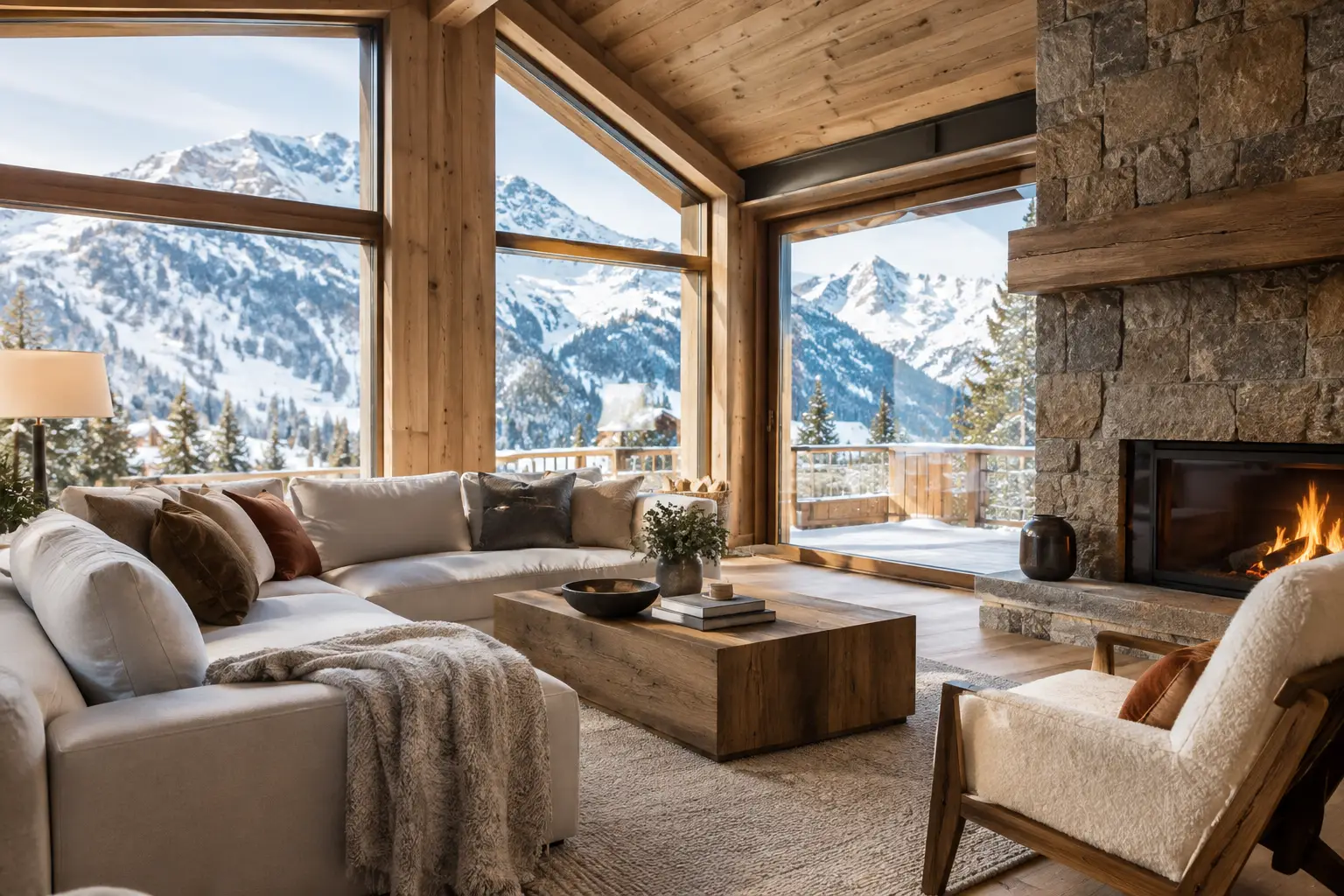
Luxury Alpine Interior Design That Feels at Home
A convincing mountain home is felt before it is examined. There is the hush beneath heavy timber beams, the softened light on limewashed walls, and the reassuring presence of a fire after a long day on the slopes. Luxury alpine interior design is not simply a matter of adding antlers, plaid, or a generous stone fireplace. At its best, it brings architecture, landscape, comfort, and local craft into quiet alignment.
For discerning travelers, that distinction matters. A chalet should offer more than a beautiful backdrop for a ski week. It should provide a private rhythm for family breakfasts, lingering lunches, fireside aperitifs, and restorative evenings when the snowfall has closed in around the valley.
What Defines Luxury Alpine Interior Design?
The most enduring Alpine interiors begin with a sense of place. A contemporary residence in Verbier may call for sculptural oak, broad expanses of glass, and a restrained palette that lets the peaks take visual precedence. In Megève, an older farmhouse might hold onto its weathered beams and irregular stone walls, with finely tailored upholstery introducing a more polished ease. In the Dolomites, pale larch, local stone, and clean-lined joinery can reflect the region's distinctive architectural traditions.
The common thread is not a fixed decorative style. It is material honesty, proportion, and atmosphere. Fine design allows a residence to feel composed without looking overly arranged. Every element has a purpose: deep seating for gathering, warm pools of light for winter evenings, and tactile finishes that invite guests to settle in.
This is also where luxury differs from excess. A chalet can have an extensive spa, a cinema, and an exceptional wine room, but those features should support the stay rather than compete with it. The most memorable homes feel generous in use, not crowded with statements.
Materials That Give a Chalet Its Character
Natural materials are foundational, but their selection requires discernment. Not all wood needs to be dark, distressed, or heavily rustic. Reclaimed timber brings age and texture to a grand great room, while brushed oak or smoked larch can lend a more contemporary residence depth without visual weight. The grain, finish, and scale of the boards all influence how a room receives light.
Stone plays an equally important role. Local slate, limestone, quartzite, and rough-cut granite can anchor entrances, fireplaces, and spa areas with a connection to the surrounding terrain. Used sparingly, stone has a reassuring permanence. Used across every surface, it can make an interior feel cold or theatrical. Balance is essential.
Textiles provide the counterpoint. Wool bouclé, brushed linen, cashmere, shearling, and finely woven rugs soften the harder architectural elements. In a mountain setting, texture often matters more than pattern. A muted plaid or a discreet folkloric weave can be deeply effective, yet an entire room dressed in obvious chalet motifs may feel more like a themed hotel than a private home.
The Value of Patina
Perfection is not always the goal. A hand-finished dining table that will take on marks over time, aged bronze hardware, or vintage leather chairs can give a newly completed chalet the settled quality that guests instinctively trust. Patina creates warmth because it suggests that life is expected to happen here.
That does not mean sacrificing refinement. The finest interiors pair relaxed surfaces with exacting craftsmanship: tailored curtains that hang beautifully, cabinetry that closes silently, and custom joinery designed around the way a family or group will actually use the house.
Designing for the Mountain Day
A beautiful chalet that does not function well can quickly become frustrating, particularly with several guests, ski equipment, and changing weather. The practical spaces often determine whether a stay feels effortless.
The arrival sequence deserves particular attention. A generous entry with proper storage, a bench for removing boots, and a separate ski room with drying facilities prevent the rituals of the mountain from spilling into the living spaces. For homes with direct ski access, this transition can be particularly satisfying: return from the piste, leave the day at the door, and enter warmth and calm.
In the main living area, seating should accommodate a whole party without forcing everyone into a single formal arrangement. One intimate conversation area near the hearth, another overlooking the view, and a reading corner slightly apart create choice. Families appreciate this as much as groups of friends, especially over a week-long stay.
Bedrooms should not be treated as secondary spaces. After full days outdoors, guests need genuine rest: proper mattresses, blackout treatments, considered bedside lighting, and enough storage to unpack rather than live from a suitcase. En suite bathrooms benefit from radiant floors, generous showers, and finishes that feel restorative rather than ornamental.
Light, Fire, and the Evening Atmosphere
Mountain light changes quickly. A room that feels extraordinary at noon can become flat and unwelcoming after sunset if it relies on a single overhead fixture. Layered lighting is therefore central to luxury alpine interior design.
Wall lights can reveal stone texture, table lamps create intimacy, and concealed lighting may quietly draw out the shape of beams or joinery. Dimmers are indispensable. The goal is not dramatic illumination, but the ability to shift the atmosphere from a bright breakfast to a candlelit dinner or a late evening by the fire.
A fireplace remains the emotional center of many chalets, whether it is an expansive traditional hearth or a more minimal contemporary installation. Its importance is partly practical, but largely ceremonial. It draws people together after skiing and gives the evening a natural pace. The best designs leave room around the fire for conversation without making it feel like a stage set.
Contemporary or Traditional: The Right Balance
There is no universal answer to whether an Alpine home should be traditional or contemporary. It depends on the architecture, the location, and the character of the residence. A centuries-old chalet in a historic village may lose something essential if every original detail is erased. Conversely, forcing rustic decoration into a bold modern structure can feel equally artificial.
The strongest approach is often layered rather than literal. A historic shell may contain contemporary art, understated furniture, and a crisp modern kitchen. A newly built chalet can gain soul through antique stools, handwoven textiles, and aged wood. The contrast keeps the interior from becoming predictable.
Art is particularly useful in this respect. Photography, abstract works, and pieces by regional makers can introduce personality without repeating the mountain view already framed by the windows. The landscape is compelling enough. Interiors should frame it, not imitate it endlessly.
Privacy Is Part of the Design
For private groups, luxury is shaped as much by separation as by sociability. A well-planned residence allows guests to come together easily, then retreat without disturbance. This might mean bedroom suites on separate levels, a quiet library away from the main salon, or a wellness area positioned so early risers do not wake the household.
Privacy also extends to the view lines within a home. Floor-to-ceiling glazing is beautiful, but it needs thoughtful curtains, screening, and orientation. A residence overlooking a valley should feel open to the mountains while remaining protected from neighboring properties and passing footpaths.
This is why a carefully selected chalet matters more than a checklist of amenities. Two homes may offer the same number of bedrooms, a spa, and a fireplace, yet one will feel far more comfortable because circulation, acoustics, and sightlines have been considered with care.
Choosing a Design-Led Chalet for Your Stay
When considering a mountain residence, look beyond photographs of the main living room. Ask how the house works in the early morning, after skiing, and during a long dinner with everyone present. Consider whether there are places for children to play, adults to read quietly, and a group to gather without feeling confined.
It is worth asking about the materials and provenance of the home as well. Residences with real architectural character tend to hold their appeal beyond the first impression. They feel right in a snowstorm, on a clear January morning, and in summer when the doors open to meadow air.
The most successful Alpine interiors do not ask for constant admiration. They make space for the people within them, the silence of the snowfall, and the particular pleasure of having nowhere else to be.
Comments