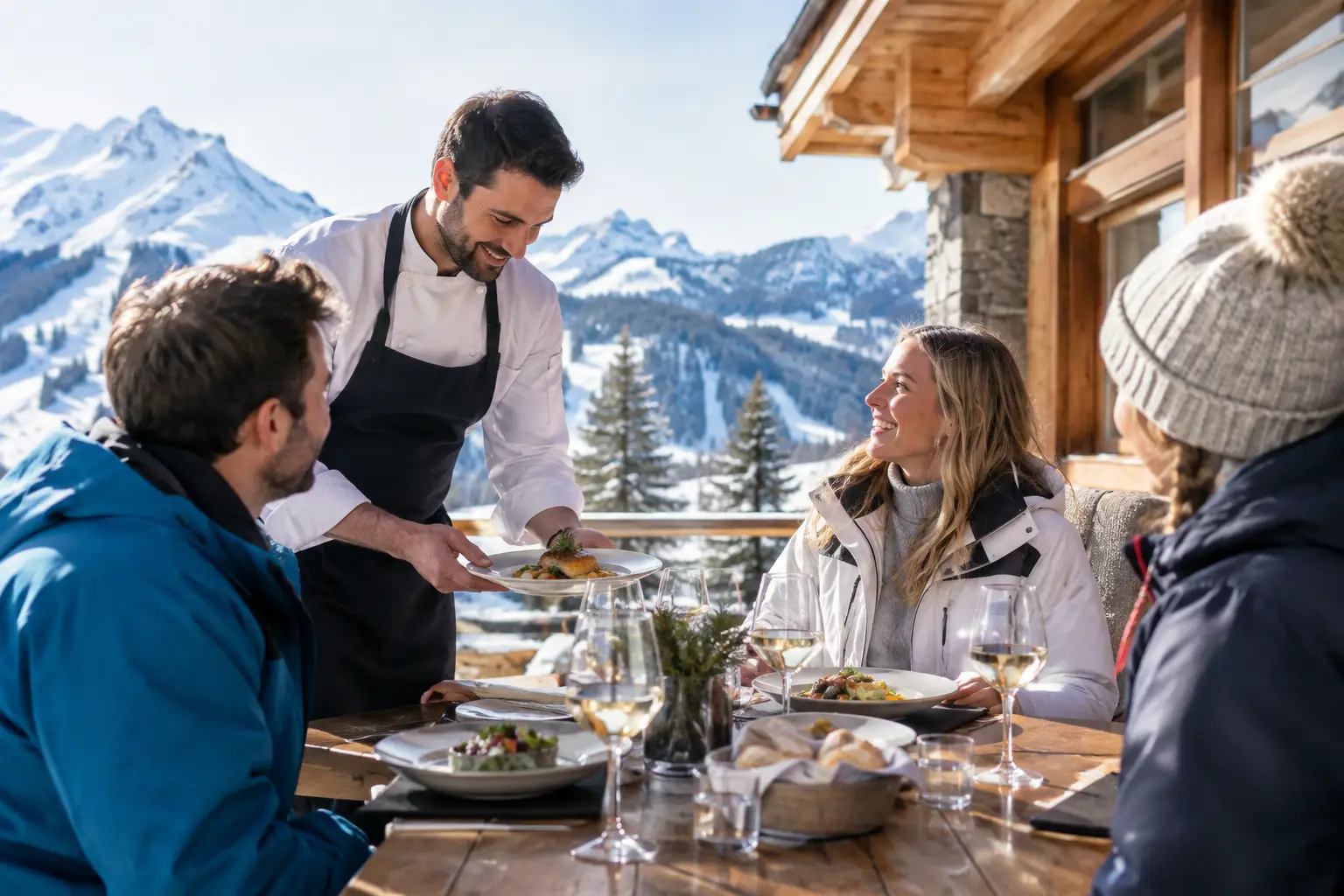
How to Choose a Catered Ski Chalet
The first morning in the mountains should not begin with a grocery run, a crowded breakfast room, or a debate over who is collecting lift passes. In a well-chosen catered ski chalet, the day starts more quietly: coffee is ready, boots are warming, the children have found the snow, and the practical details have already been considered. It is a small shift in rhythm, but it changes the character of a ski vacation.
For families and private groups, a chalet can offer something hotels rarely do with the same ease: space that is entirely their own, paired with the reassuring presence of a skilled team. Yet “catered” can mean very different things from one residence to another. The right choice depends not only on the caliber of the cooking, but on the service style, staffing pattern, location, and the way your group likes to travel.
What a catered ski chalet actually includes
At its best, catered service is not a performance. It is the discreet structure around a relaxed stay: a host who knows when breakfast should appear, a chef who understands a guest's preferences before the first dinner, and a driver or concierge who makes the logistics feel lighter without becoming intrusive.
Most catered chalets include daily breakfast, afternoon tea, and dinner on a set number of evenings. Housekeeping is generally part of the arrangement, and many residences provide a chalet host or dedicated service team. In larger homes, this may extend to a private chef, house manager, driver, and concierge support. Wine, bar costs, and staff days off are often handled separately, so the detail matters as much as the headline.
The distinction is worth making because a chalet advertised as catered may offer a convivial, fixed-menu dinner service on five or six nights, while another operates much more like a private residence with a chef designing each meal around the group. Neither is inherently better. A multigenerational family with young children may value flexible, early suppers and familiar dishes. A group of friends traveling for a milestone may prefer longer dinners, an accomplished wine selection, and a menu that follows the season.
Why private chalet service suits mountain travel
Ski days have their own cadence. Everyone leaves the house at a different pace, weather changes plans, and the pleasure of the evening often lies in not having another reservation to meet. A catered chalet gives a group room to return on its own terms.
There is particular value after a day on the mountain. Rather than reassemble in a hotel lobby, guests can settle beside the fire, use the spa, or simply sit with a drink while dinner is prepared. Children can be put to bed nearby without ending the adults' evening. Teenagers have a screening room or games area rather than a second hotel room. For couples, the privacy can be especially appealing: a glass-walled living room facing a snowfall often feels more personal than a busy dining room, however polished.
The residence itself also matters. In Courchevel, a ski-in, ski-out chalet may make the most demanding school-holiday week feel manageable. In Verbier or Méribel, a private driver can be more useful than slopeside access, particularly when dining and village life are part of the plan. In Zermatt, where no private cars enter the village, smooth arrival coordination and well-managed electric taxis matter more than they might elsewhere. Service should respond to the destination rather than follow a generic formula.
The questions that reveal the quality of a catered ski chalet
Beautiful photographs rarely explain how a stay will feel at 8 a.m. or 6 p.m. Ask how the house works in practice. Is breakfast served at a flexible time? Is the chef in residence for the entire stay? How are dietary requirements handled, particularly for children or guests with serious allergies? Is the service team shared with another property, or wholly dedicated to your party?
Staff schedules deserve equal attention. Many classic catered chalet arrangements include one or two staff days off, when guests dine out or arrange a simpler supper. This can be a welcome opportunity to explore a resort, but it should be known in advance. If your group expects daily chef service, confirm it rather than assuming it. Likewise, clarify whether lunch provisions, après-ski drinks, premium wines, and transportation are included or charged according to use.
It is also sensible to ask about the chef's approach. An excellent chef should be able to produce precise, elegant food, but the best chalet meals feel right for the group rather than overly formal. After a cold day in deep snow, a beautiful tartiflette made with care may be more welcome than a restaurant-style tasting menu. On another evening, a lighter Alpine-inspired dinner may suit better. Good advance planning allows for both.
Space is part of the service
A chalet's floor plan can either support an easy week or create subtle friction. For several families, bedrooms of comparable quality matter. A bunk room near the primary suites may be useful for younger children; older teenagers may prefer a separate floor or media room. Consider whether the dining table truly seats the full party comfortably, whether there is a second living space, and how the wellness area is arranged.
A pool, hammam, or treatment room can be a lovely addition, but they are not substitutes for thoughtful layout. The most successful homes give guests choices: a sociable kitchen and dining area, a quiet corner for reading, and enough distance between bedrooms for privacy. This is especially valuable on longer stays, when a residence begins to feel less like accommodation and more like a temporary home.
Choosing the right level of service
There is no single correct version of a catered stay. Some travelers want the warmth of a familiar host, daily homemade cake, and a chef-led dinner most nights. Others prefer a more independent schedule, using the chalet as a private base while exploring the resort's restaurants. The latter may be better served by a self-catered residence with a concierge arranging grocery delivery, restaurant reservations, and an occasional private chef evening.
For a fully catered stay, look for service that feels anticipatory rather than ceremonial. The team should be present when needed and invisible when not. This is particularly important for guests accustomed to privacy, or for groups whose plans may change with the weather, ski conditions, or a spontaneous late lunch on the slopes.
At Alpin Privé, the starting point is not simply the number of bedrooms or the presence of a spa. It is the relationship between the home, its setting, and the people traveling together. A dramatic contemporary chalet above Megève may suit one group perfectly, while another will be happier in a more traditional, piste-side residence in the Three Valleys. The right recommendation comes from understanding how the week is meant to unfold.
Plan early, then leave room for the mountains
The most sought-after catered chalets are often reserved well ahead for Christmas, New Year, and school vacation weeks. Early planning gives more choice in the homes with the strongest locations, best staff teams, and bedroom configurations that work for larger families. It also makes it easier to secure ski instructors, childcare, tables at coveted restaurants, and private transfers at peak times.
That said, detailed planning should not turn a mountain holiday into an itinerary. Share priorities before arrival: favorite breakfast foods, children's routines, celebrations, wine preferences, desired restaurant nights, and any non-ski plans. Then allow the week to breathe. A clear blue morning may call for a long lunch on the piste; heavy snowfall may make a fireplace lunch and an afternoon in the spa the better idea.
A catered chalet earns its place not through ceremony, but through freedom. When the home is well suited to the group and the service is genuinely attentive, guests are left with more time for the mountain, each other, and the welcome stillness that arrives when the lifts have stopped.
Comments