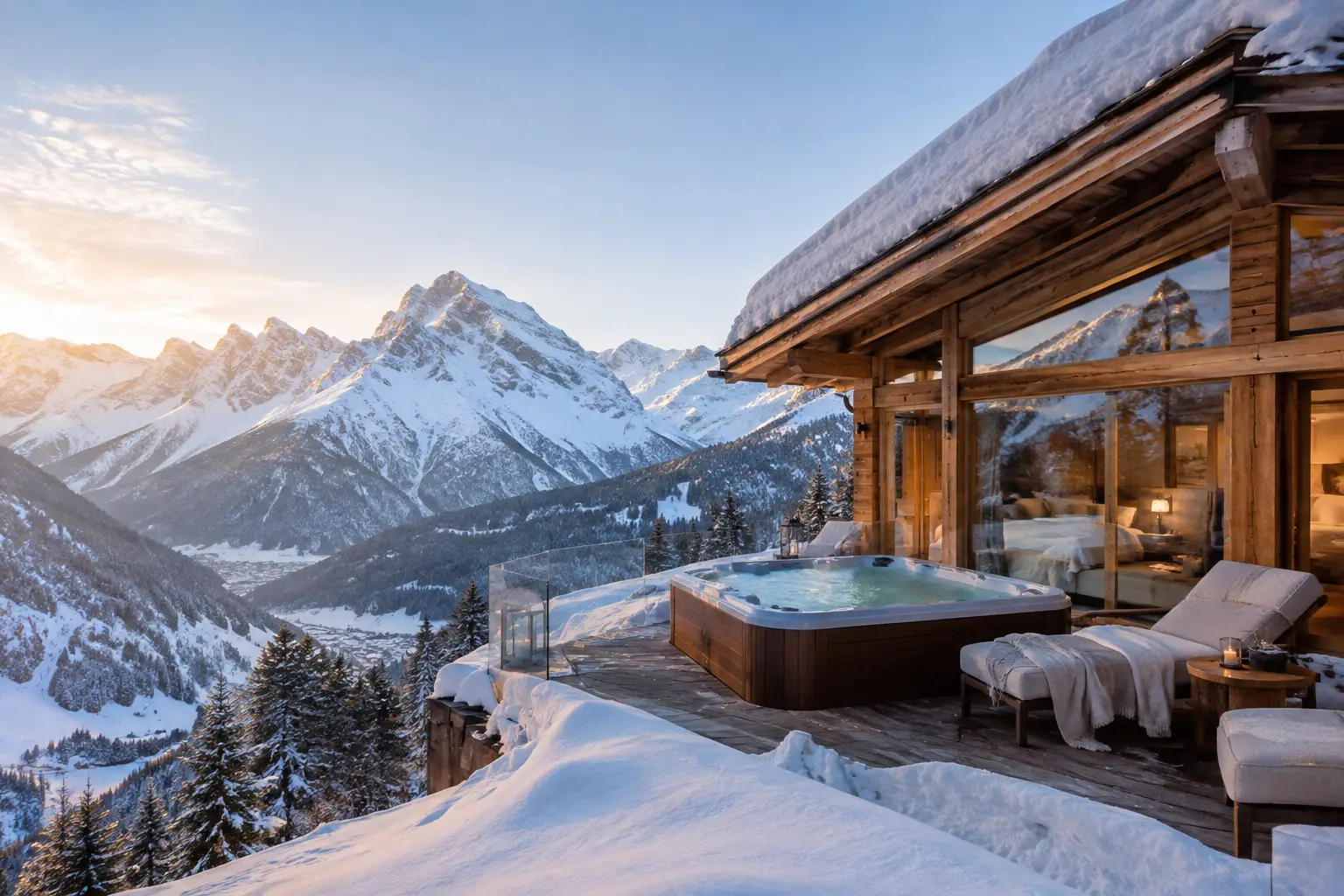
Choosing an Alps Honeymoon Chalet That Feels Private
The first morning is often what couples remember most: fresh snow gathering on the terrace, coffee beside a quiet fire, and no timetable beyond the one they choose together. An Alps honeymoon chalet creates room for that kind of privacy. It replaces the public rhythm of a hotel with a private retreat where the setting, service, and pace can be shaped around two people.
For a honeymoon, that distinction matters. The Alps can be exhilarating, social, and full of movement, but a chalet offers a place to return to after a day on the mountain or an unhurried afternoon in the village. The best choice is not necessarily the largest residence or the most famous resort. It is the one that feels right at the end of the day.
What an Alps Honeymoon Chalet Should Offer
A honeymoon chalet should feel intimate without being small. Couples often need less space than a family group, but they benefit from rooms that have been thoughtfully designed: a generous primary suite, a sitting room with a view, a proper dining area, and ideally a wellness space that feels private rather than performative. A sauna, outdoor hot tub, or treatment room can be particularly appealing after skiing, though these details only matter if the house itself has warmth and character.
Architecture sets the tone. Some couples are drawn to old timber, local stone, and deep window seats overlooking a valley. Others prefer crisp contemporary interiors, gallery-like calm, and glass walls that frame the peaks. Neither is inherently more romantic. The question is whether the residence feels like a home you want to inhabit, rather than simply a place to sleep between activities.
Privacy also has practical dimensions. A chalet positioned above a resort may offer expansive views and a sense of separation, while a discreet home near the center of town makes it easy to walk to dinner, browse boutiques, or return after an aperitif without waiting for a driver. Ski-in/ski-out access is convenient, but it can place a property near busy pistes. For some couples, a quieter address with a short private transfer is the better trade-off.
Choose the Resort for the Mood You Want
The Alps are not one experience. Each destination has its own rhythm, architecture, dining culture, and relationship with the mountain.
Courchevel suits couples who enjoy polished service, exceptional restaurants, and a ski area broad enough to make each day feel different. Its most private chalets can feel remarkably secluded, even within a resort known for its lively winter scene. Méribel offers a softer, more central base in the Three Valleys, with handsome chalet neighborhoods and straightforward access to varied terrain.
Megève has a more village-oriented atmosphere. Horse-drawn carriages, traditional facades, independent shops, and a strong food culture give it a gentle elegance that appeals to couples who want skiing alongside long lunches and slow evenings. Chamonix, by contrast, feels more dramatic and energetic, framed by high peaks and a strong sense of Alpine history. It is particularly compelling for confident skiers, mountaineering enthusiasts, and couples drawn to a less formal mountain town.
In Switzerland, Verbier balances a sociable international scene with serious terrain and a wide choice of architecturally distinctive private homes. Zermatt is car-free and more cinematic, with the Matterhorn present in nearly every view. The logistics are different there, but the absence of traffic adds a rare stillness. St. Moritz has its own assured character: grand hotels, frozen-lake pursuits, art, fashion, and bright Engadin light. It is often the right choice when skiing is only one part of the stay.
There is no universal answer. A couple looking for a quiet week of skiing and fireside dinners may find Megève or a secluded Zermatt hamlet ideal. Those who want to ski hard, dine late, and spend an afternoon at a mountain club may prefer Courchevel or Verbier.
Let the Season Shape the Stay
Winter is the classic choice, particularly from mid-January through early March, when snow conditions are generally strong and the festive crowds have eased. January brings cold, clear days and quieter slopes. February offers a more animated atmosphere, although school holiday periods require careful planning. March can be wonderfully relaxed, with longer afternoons on sunny terraces and softer light across the mountains.
A summer honeymoon deserves equal consideration. The high Alpine landscape changes completely when meadows are in bloom and snow remains only on the highest summits. Days can be filled with guided hiking, e-biking, climbing, lake swimming, or a long lunch at a mountain refuge. Evenings are cool enough for the fire, and many chalets feel especially peaceful without the winter bustle.
Shoulder seasons are more dependent on the destination. Some resorts become very quiet between seasons, with restaurants and lifts closed for part of the year. That can be perfect for couples seeking isolation, but it is not ideal if dining options and daily activity are central to the trip. A knowledgeable local adviser can clarify what will actually be open during the dates under consideration.
Service Should Feel Present, Not Intrusive
For a honeymoon, service is most effective when it removes friction without taking over the experience. A private chef may prepare dinner on the first evening, stock the kitchen with favorite breakfast items, and create one special meal later in the week, while leaving other nights open for restaurants. Daily housekeeping keeps the chalet calm and ordered, but should respect the couple’s preferred schedule.
The same principle applies to transportation and reservations. Airport transfers, ski fittings arranged in the chalet, lift passes prepared in advance, and a driver available when needed can make an arrival feel effortless. Yet a well-planned honeymoon should retain space for spontaneity: an impromptu lunch in a mountain restaurant, a walk through the village after snowfall, or an extra hour in the spa.
A discreet concierge also adds value in the details that are hard to arrange remotely. This might mean securing a table with the right atmosphere, organizing a private guide for an off-piste day, arranging a helicopter transfer when conditions permit, or knowing which quiet trail is best for a winter walk. At Alpin Privé, the intention is not to fill every hour. It is to make the hours you choose feel considered.
Plan a Few Anchor Moments
The strongest chalet honeymoons are rarely over-programmed. Rather than creating a full itinerary, choose a handful of moments that give the week shape. A private ski guide on the first day can help orient you to a large ski area and reveal the best terrain for your level. A long mountain lunch is worth reserving, especially in resorts where the most atmospheric tables are in demand.
One evening should belong entirely to the chalet. Ask for a candlelit dinner prepared at home, perhaps with local ingredients and wines selected around your tastes. Another might be set aside for a couples treatment followed by the sauna or hot tub, with no plans afterward. These are small decisions, but they prevent the trip from becoming a series of restaurant reservations and ski logistics.
If one partner skis more confidently than the other, plan for that openly. Large linked ski areas make it easy to spend part of the day separately and meet for lunch, but a resort with excellent non-ski experiences may be the better fit. A honeymoon works best when neither person feels they are compromising every day.
Details Worth Confirming Before You Book
Photographs can convey atmosphere, but they do not always explain how a chalet functions. Ask about the exact location and transfer time to lifts or village restaurants, particularly if you do not intend to rent a car. Confirm whether a driver is included, how many hours of service are provided, and whether the access road remains straightforward in heavy snowfall.
It is also wise to understand staffing. Some residences include a dedicated host and daily service; others are more independent, with concierge support available separately. Neither approach is superior. A fully staffed chalet can be deeply relaxing, while a lightly serviced home may suit couples who value complete solitude.
Finally, look beyond the bedroom count. The quality of the primary suite, the outlook from the terrace, sound insulation, fireplace, and ease of moving between indoor and outdoor spaces often matter more to two people than the scale of the property. A smaller chalet with an exceptional position can feel more personal than a grander one designed primarily for groups.
The right Alpine honeymoon is not defined by how much is arranged for you. It is defined by how naturally the stay leaves room for one another: the silence of the snowfall, the warmth of the hearth, and the pleasure of waking up with the mountains entirely in view.
Comments