Alpine Vacations for Those Who Value Privacy
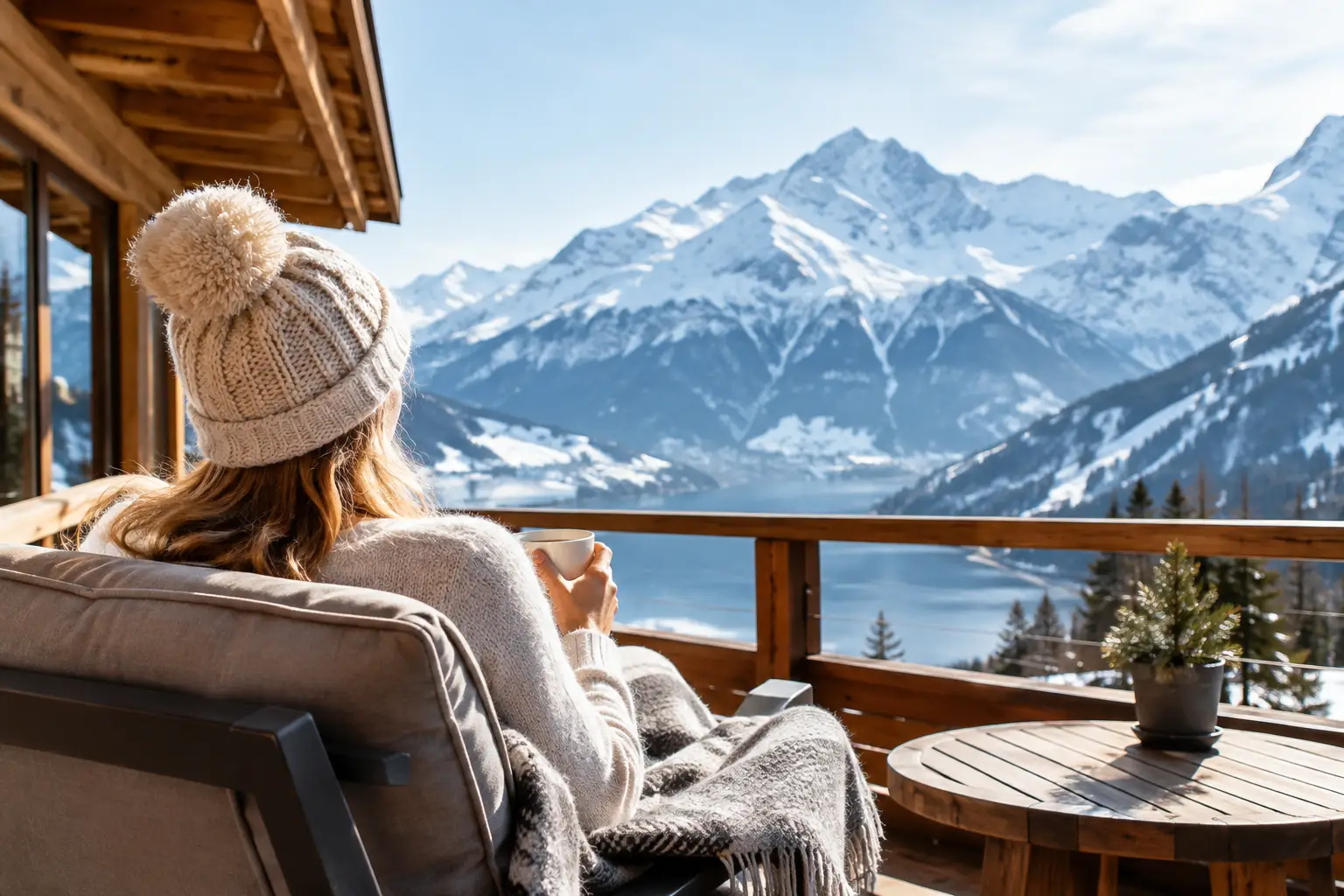
The most memorable Alpine vacations are rarely defined by how many runs are skied in a day. They are shaped by the details around them: stepping into warm boots laid out by the fire, returning to a house that feels entirely your own, and watching snowfall settle over the valley with nowhere else to be. For families, close friends, and couples who travel well, privacy changes the rhythm of a mountain stay.
The luxury of having the mountains to yourself
A private chalet offers something even the finest hotel suite cannot always provide: a sense of ownership over time and space. Mornings can begin slowly, with children still at breakfast while the first lifts turn overhead. Lunch can stretch into the afternoon. Dinner need not follow a reservation time or a dining room dress code.
This is especially valuable when several generations or households travel together. A well-chosen residence gives everyone room to withdraw without becoming separate. One guest may read beside the hearth, another may use the spa, while teenagers settle into a cinema room after skiing. The group gathers naturally, rather than because a lobby or restaurant dictates the schedule.
Privacy also brings discretion. In destinations where the social scene can be as visible as the slopes, a secluded setting, a private entrance, or direct ski access offers a quieter kind of privilege. It allows the stay to feel personal rather than performative.
Choosing an Alpine destination with intention
The Alps are not one experience. Each resort has a distinct pace, landscape, and social character, so the right destination depends on what your party values beyond skiing.
For expansive skiing and lively village energy
Courchevel and Méribel appeal to groups seeking extensive terrain, polished infrastructure, and a broad choice of restaurants. Courchevel has an unmistakably glamorous edge, particularly in its higher villages, while Méribel tends to feel more centrally placed and convivial. Both work well for mixed-ability groups, although ski-in, ski-out access varies considerably by neighborhood and snow conditions.
Verbier combines serious off-piste terrain with an international, relaxed atmosphere. Its village life is energetic, yet there are residences tucked above the center where guests can enjoy open views and a more removed setting. It is a strong choice for confident skiers traveling with friends, provided the group is comfortable with its steep streets and, in some locations, short driven transfers.
For character, atmosphere, and a slower pace
Megève has a softer, more village-like sensibility, with horse-drawn carriages, excellent food, and handsome architecture that feels rooted in Savoyard tradition. It is often ideal for families and guests who value boutiques, dining, and winter walks as much as vertical descent.
Zermatt offers a more dramatic setting, beneath the Matterhorn, and a car-free village that retains a particular charm. Its terrain is substantial, but the destination also rewards those who appreciate long lunches, mountain rail journeys, and an atmosphere that feels distinct from the French resorts.
In the Dolomites, the appeal is as much visual and culinary as it is athletic. The pale rock formations, Italian hospitality, and varied mountain huts make the region especially rewarding for travelers who prefer a ski day with texture rather than a race from first lift to last.
Why the residence matters more than the bedroom count
A chalet can photograph beautifully and still be wrong for the way a group travels. Bedroom count is only the beginning. Consider how the house works at the busiest moments of the day: the morning ski departure, the return from the slopes, and the hour before dinner.
A true ski-in, ski-out home may be worth prioritizing for a family with young children or a group determined to maximize time on snow. Yet a residence a few minutes from the lifts can be more appealing if it has better views, a larger living room, or greater privacy. The distinction should be understood clearly. In the Alps, ski access can mean anything from stepping directly onto a piste to a short walk in ski boots, depending on snowfall and local terrain.
Look beyond the main salon as well. A separate television room may preserve the calm of an elegant sitting room. A ski room with proper drying facilities can make the morning considerably easier. A pool, hammam, or treatment room adds value on a storm day, but only if the group will genuinely use it. For some guests, a quiet library, a generous dining table, and an excellent cook matter far more.
Architecture has its own role in how a stay feels. Traditional timber and stone can create intimacy, while contemporary Alpine design may frame the mountains through glass and clean lines. Neither is inherently more luxurious. The right choice is the one that suits the destination, the season, and the people around the table.
The best days are planned, but not overplanned
Thoughtful planning removes friction without turning a holiday into an itinerary. This is where discreet concierge support proves its value. Transfers should be timed around the realities of mountain travel, not simply airport arrival schedules. Equipment fittings are best arranged before the first ski morning. Restaurant reservations, guides, childcare, and in-chalet dining should be considered early during high season, particularly over Christmas, New Year’s, and school vacation weeks.
At the same time, leave room for weather and instinct. A clear morning may call for a private guide and a high-altitude lunch. Heavy snowfall may make a spa afternoon and a long fireside meal more appealing. Guests who try to plan every hour often miss the pleasure of responding to the mountains as they are.
For a private celebration, the balance matters even more. A milestone birthday can be marked with a chef-led dinner and a few thoughtful touches rather than an oversized production. The most successful gatherings tend to feel effortless because the practical work has been handled quietly in advance.
Winter is only one version of the Alps
Ski season brings a particular kind of energy, but summer and early fall reveal another side of the mountains. Meadows replace pistes, lake swims replace après-ski, and the air feels sharp even under clear sun. Chamonix, Zermatt, St. Moritz, and the Dolomites are particularly compelling outside winter for hiking, cycling, climbing, golf, and long lunches on terraces overlooking the peaks.
Summer stays can also offer more flexibility in residence choice and a different kind of privacy. The days are longer, the pace less compressed, and the villages are often easier to enjoy without peak-season intensity. For families traveling across generations, this can be the more forgiving season: active days are available, but no one needs to ski to belong.
A more considered way to travel in the mountains
The value of a well-planned chalet stay lies in the freedom it creates. There is space for a child’s early bedtime, an impromptu supper after a late arrival, a private lesson for one skier, and a day with no agenda at all. Alpin Privé approaches Alpine travel with this balance in mind, pairing distinctive residences with the local understanding needed to make each stay feel settled from the first evening.
When choosing where to go, begin not with the most famous resort, but with the experience you want to share. The right Alpine holiday is the one that gives your group room to be together, and the ease to enjoy the silence of the snowfall when the day is done.
Comments