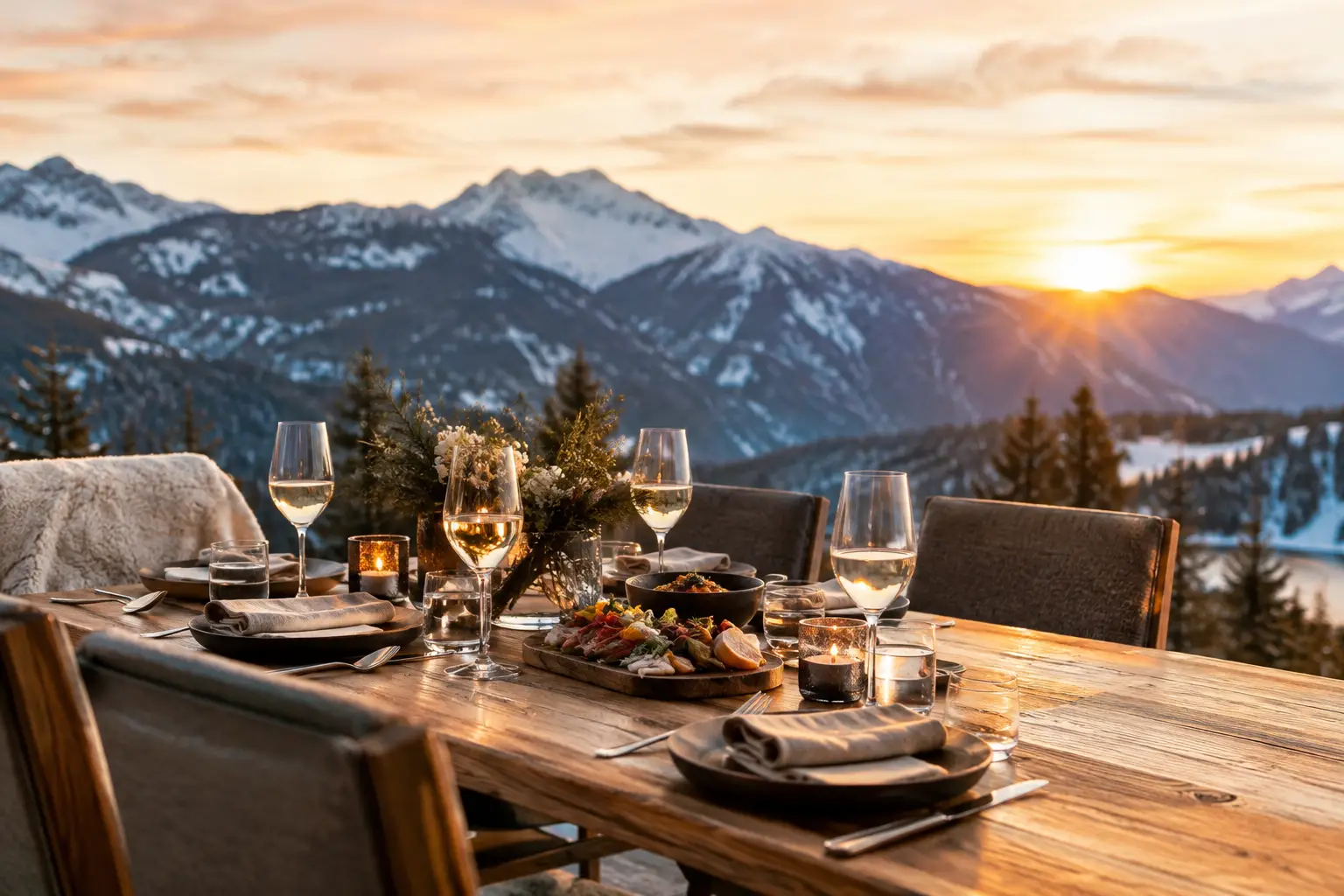
6 Top Private Dining Mountain Experiences
The finest top private dining mountain experiences are rarely about a table with the widest view or the most elaborate menu. They are about timing, privacy, and the pleasure of settling into an evening without the small frictions of a restaurant reservation. After a day on the slopes, a private dining room or candlelit chalet table offers something more personal: familiar faces, a good bottle opened at the right moment, and the quiet confidence of a meal designed around the people present.
For families, private groups, and couples traveling in the Alps, dining can become the anchor of the stay. It is where children linger over dessert, where ski plans turn into stories, and where a celebration feels genuinely private rather than performed in a crowded dining room. The setting matters, certainly. So do the chef, the produce, and the wine. Yet the lasting quality comes from how naturally the evening fits the rhythm of the holiday.
What Defines the Top Private Dining Mountain Experiences
A memorable private mountain dinner begins with a residence that can hold the occasion well. In some chalets, that means a formal dining room with a long oak table, a stone fireplace, and panoramic windows over a snow-covered valley. In others, it is a more intimate kitchen table beneath aged timber beams, with the chef working quietly nearby. Neither is inherently better. A multi-generational group may appreciate the ease of a large, comfortable room, while a couple or small party may prefer a more informal supper arranged around the hearth.
The best private chefs understand that Alpine dining is not simply restaurant cuisine transferred into a chalet. It should respond to the pace of the day, the altitude, the guests, and the season. A long lunch after a morning of skiing calls for a different approach than a late dinner following an afternoon at the spa. The menu may draw on Savoyard, Italian, Swiss, or Austrian traditions, but it should never feel fixed or overly theatrical.
Discreet service is equally central. Some guests enjoy a fully staffed, restaurant-style dinner with canapés, formal wine service, and polished courses. Others want a chef-led meal that feels almost domestic, with the table set beautifully and the evening left largely to the group. The right format depends on the occasion. Privacy is not the absence of service. It is service calibrated with judgment.
Six Ways to Shape a Private Mountain Dinner
A chef’s tasting menu in the chalet
For a milestone birthday, an arrival-night supper, or the final evening of a ski week, a tasting menu gives the night a clear sense of occasion. In Courchevel, Verbier, or St. Moritz, this might mean refined Alpine ingredients interpreted with a light hand: lake fish, winter roots, truffle, local cheeses, and a thoughtful dessert rather than an overly rich finale.
The most successful menus have a point of view but remain flexible. Dietary preferences should be handled quietly, without making a guest feel set apart from the table. For larger parties, a chef may create a shared opening course before moving into individually plated dishes. That balance preserves a sense of generosity without making service feel slow or formal.
A fireside raclette or fondue, thoughtfully done
There is a reason these classics endure. Melted cheese, potatoes, charcuterie, and a bottle of regional white wine belong to a cold Alpine evening. Yet a private version can be far more elegant than the standard restaurant ritual. The difference lies in the ingredients, the setting, and the pacing.
A good host will choose cheeses with character, offer carefully selected accompaniments, and avoid turning the table into a novelty. Raclette works particularly well for a relaxed family night or a group returning from a day in deep snow. It is convivial by nature, and it asks little of guests beyond being present.
A wine-led dinner with a local expert
The Alps are often associated with skiing before food and wine, but the regions hold compelling bottles that deserve a place at the table. A private tasting can introduce mountain whites from Savoie, rare Swiss vintages, elegant Piedmont reds near the Italian Alps, or carefully chosen French and Italian cellars suited to the menu.
This is especially appealing for groups who enjoy wine but do not want a lecture. The right expert reads the room, shares a few meaningful stories, and allows the dinner to remain a dinner. Consider it for an evening when the weather keeps everyone happily indoors, or as a gentle first-night gathering when guests are arriving from different cities and time zones.
A slope-side lunch with the feeling of a private retreat
Not every exceptional dining experience happens after dark. A reserved terrace, a quiet mountain restaurant table, or a discreet hut reached by ski can offer a striking midday pause. In Zermatt, Méribel, or the Dolomites, lunch may be defined by high-altitude light, a clear view of the peaks, and the welcome contrast between crisp air and a warm dining room.
This requires more planning than it appears. Ski ability, weather, transfer timing, and the appetite of the group all matter. A private guide can make access feel easy, particularly where a scenic restaurant is best approached on skis. For a mixed-ability group, a vehicle-accessible mountain setting may be the wiser choice. The view may be similar, but the experience will be more relaxed if no one is anxious about the route home.
An intimate après-ski supper for the family
Families often benefit most from dining that feels uncomplicated. After an active day, younger guests may not have the patience for a long formal meal, while adults still want something considered. A family-style menu solves this well: a simple first course, roasted fish or meat with seasonal vegetables, a favorite pasta or familiar dish for children, and a dessert that can be shared beside the fire.
A skilled chalet chef can prepare this with far more care than the phrase “family-style” suggests. The goal is not to make everyone eat the same thing. It is to remove decisions and make the evening feel easy. Earlier seating, a separate children’s supper if preferred, and a more leisurely adult dessert course can all be arranged without disrupting the atmosphere.
A private celebration with music, flowers, and restraint
An engagement, anniversary, or significant birthday deserves detail, though not necessarily spectacle. A table dressed with seasonal flowers, hand-lettered menus, candles, and a champagne selected for the guests can create a powerful sense of occasion. In a beautifully designed chalet, the architecture does much of the work. There is little need to compete with it.
For celebrations, coordination is everything. The dinner should flow from the day rather than interrupt it. Perhaps guests return from skiing to a fire already lit and aperitifs waiting, followed by a dinner that builds quietly toward a dessert or toast. Music can help, but it should sit beneath conversation. The most elegant celebrations leave room for spontaneity.
Choosing the Right Residence for Private Dining
A residence may sleep twelve comfortably yet be poorly suited to hosting twelve for dinner. Before confirming a chalet, look beyond bedroom count. Ask whether the dining table seats the full group with ease, whether there is space for a chef to work, and whether the room feels welcoming once everyone has gathered. Open-plan living can be sociable, though some groups value a separate dining room where children can leave the table and adults can continue the evening without interruption.
Service arrangements also vary. Some private homes are designed for fully staffed stays, while others suit occasional chef dinners arranged around a more independent itinerary. Neither approach is a compromise. The right choice depends on how much structure guests want. A party that plans to dine out several evenings may value a flexible chef for selected nights. A family holiday during peak ski season may prefer the reassurance of an in-house team managing breakfast, afternoon tea, and dinner each day.
Location changes the experience as well. A secluded chalet above Megève may invite long evenings at home, while a central residence in St. Anton or Courchevel makes it easy to alternate private dinners with lively restaurants. Ski-in, ski-out access can be valuable, but it is not always the deciding factor. For some travelers, a private setting, a strong view, and a dining room with genuine character matter more after the lifts close.
A Few Details Worth Arranging Early
Private dining rewards advance thought, particularly during Christmas, New Year, and school vacation weeks. The best chefs and specialist suppliers are often secured early, and a menu is stronger when there is time to understand the group. Share allergies and dietary requirements in detail, but also mention preferences: a beloved regional dish, a wine style, a child’s favorite dessert, or whether guests would rather have generous portions than a formal progression of courses.
It is also useful to decide what privacy means to your group. Some hosts prefer service to be almost invisible after the main course; others enjoy a sommelier or chef describing each dish. There is no correct answer, only the version that allows everyone to relax.
A well-planned private dinner should feel less like an event being delivered and more like the evening your group would have chosen for itself, if only the mountain, the kitchen, and the time had all aligned.
Comments